Non-Emergency Medical Transportation Coverage

NEMT Insurance

Specialized Insurance for Medicaid & Private-Pay Medical Transport Providers

If you operate a Non-Emergency Medical Transportation (NEMT) business, your insurance needs go beyond standard commercial auto coverage.

Whether you transport Medicaid beneficiaries, wheelchair patients, or stretcher-bound individuals, your operation requires for-hire livery insurance designed for passenger medical transport.

CNS Insurance helps NEMT providers secure compliant, cost-effective coverage that protects drivers, vehicles, passengers, and your business.

Who Needs NEMT Insurance?

Non-Emergency Medical Transportation insurance is coverage for businesses that transport individuals to and from medical appointments when there is no immediate threat to life or health.

This includes:

  • Medicaid non-emergency medical transportation
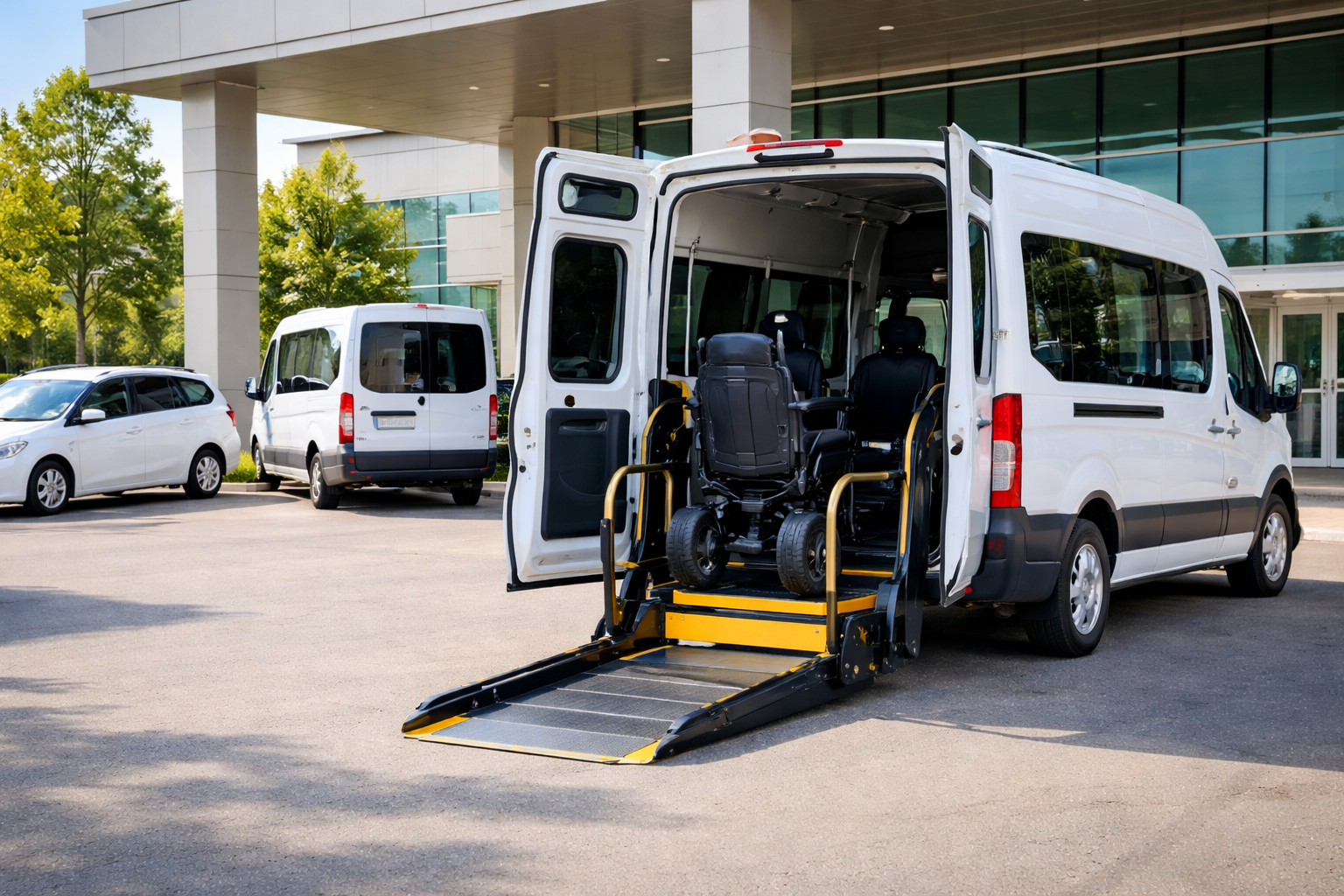
  • Wheelchair van services
  • Stretcher transport
  • Ambulatory patient transport
  • Senior and assisted living transportation
  • Contracted healthcare transport services

Because NEMT providers generate revenue from transporting passengers, coverage must be structured as for-hire livery insurance, not personal auto insurance.

Get a Non-Emergency Medical Transportation Insurance Quote

Vehicles Covered Under NEMT Insurance

NEMT insurance applies to various vehicle types, including:

  • Wheelchair vans
  • Ambulatory passenger vans
  • Stretcher cars
  • Taxis used for medical transport
  • Small buses

Premiums vary depending on:

  • Vehicle age
  • Seating capacity
  • Vehicle modifications
  • Lift equipment
  • Travel radius
  • Urban vs. rural operation

Non-Emergency Medical Transportation (NEMT)

What Coverage Do NEMT Carriers Need?

Insurance requirements vary by state, contract, and vehicle type, but most NEMT providers need the following:

1. Commercial Auto Liability (Required)

Covers bodily injury and property damage from vehicle accidents.

  • Under 10,001 lbs GVW: $300,000 minimum
  • Over 10,001 lbs GVW: $750,000 minimum

Many Medicaid or healthcare contracts require $1,000,000+.

2. General Liability (Often Required)

Protects against non-auto claims like:

  • Passenger injuries outside the vehicle
  • Slip-and-fall incidents
  • Property damage

Typical limit: $1,000,000 per occurrence

3. Physical Damage (Recommended)

Covers vehicle damage from:

  • Collision
  • Theft
  • Vandalism
  • Weather

Not always required, but critical to keep vehicles operational.

4. Workers’ Compensation (Required in Most States)

Covers employee injuries, medical bills, and lost wages.
Some states require coverage for all drivers, including owner-operators.

5. Umbrella / Excess Liability (Strongly Recommended)

Provides additional liability protection above base limits.
Many NEMT providers carry $1M–$5M in excess coverage due to passenger injury exposure and contract requirements.

Customers Reviews

Steps to get Commercial Truck Insurance

01

Request a quote

Before we can get you an estimate, we are going to need some information. Fill out a complete quote or quick quote to get started.

02

Get coverage

After we gather all of your information we will get back to you with a detailed breakdown of your coverage and how much it will cost.

03

Start saving

Our Commercial Truck Insurance specialists are constantly working to get you the best rates, whether you are a new or existing client.

Quick Commercial NEMT Insurance Quote

Do you have an Insurance Submission Packet? (upload any relevant information about vehicles, drivers, etc.)

CASE STUDY

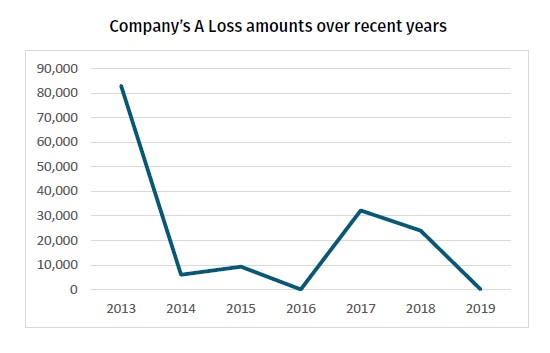
Company A, a 9-truck carrier, approached CNS due to a problem in their operations. Their surplus lines carrier who was charging $190,000 annually for 9 trucks was canceling their liability insurance. The trucking company called CNS to see what could be done.

CNS reviewed carrier’s roadside safety, performance, driver files, loss ratio history, systems, and process. CNS analyzed the company had no losses but high BASIC SMS scores. Upon further investigation there were only two drivers that had bad records.

CNS developed hiring and qualification standards and implemented these standards within the company. The company also engaged CNS to manage their divers through drivers qualifications, monitoring drivers and training drivers.

As shown in the graph, the clients safety scores improved year after year.

As a result of the improved safety scores CNS Insurance was able to secure insurance which saved the company $100,000.00 in annual premium. The client has been a loyal CNS and CNS Insurance customer for 6 years.

We Are Your Insurance Family

We are always a phone call away.

Our customer service is unmatched and we take pride in the fact that we build lasting relationships with everyone we talk to whether you are a client or not.

Frequently Asked Questions

If your questions are not answered below, you can contact one of our Commercial Trucking Insurance Specialists and we are happy to help with anything you may need.

NEMT insurance is specialized commercial coverage for businesses that transport patients to and from medical appointments when there is no emergency. It is designed for for-hire passenger transportation operations, not personal auto use.

Any business transporting passengers for medical purposes — including Medicaid beneficiaries, wheelchair patients, or stretcher transport clients — needs NEMT insurance. Personal auto policies do not cover this type of operation.

Most NEMT providers need:

  • Commercial auto liability

  • General liability

  • Physical damage coverage

  • Workers’ compensation (in most states)

  • Umbrella or excess liability (often contractually required)

Federal minimum requirements depend on vehicle weight:

  • Under 10,001 lbs GVW: $300,000

  • Over 10,001 lbs GVW: $750,000

However, many Medicaid or healthcare contracts require $1,000,000 or more.

Yes. Medicaid transportation brokers often require higher liability limits, proof of workers’ compensation, and certificates of insurance naming additional insured parties.

Physical damage insurance covers vehicle repairs or replacement due to collision, theft, vandalism, fire, and weather-related events. It is especially important for wheelchair vans and modified transport vehicles.

In many states, yes. Some states require all drivers — even owner-operators — to carry workers’ compensation coverage. Requirements vary by state law.

NEMT insurance applies to:

  • Wheelchair vans

  • Ambulatory passenger vans

  • Stretcher vehicles

  • Medical taxis

  • Small buses used for medical transport

NEMT operations carry higher risk due to passenger injury exposure, medical vulnerability of riders, and assistance provided during loading and unloading.

Insurance carriers evaluate:

  • Driver age and driving records

  • Claims history

  • Vehicle age and seating capacity

  • Safety procedures and training

  • Operating radius

  • State regulations

Strong safety programs and documented procedures can positively impact pricing.