Licensing, Insurance, Vehicles, and Startup Costs
Non-Emergency Medical Transportation (NEMT) businesses provide a vital service by helping individuals get to medical appointments when they lack reliable transportation. This includes seniors, Medicaid recipients, patients with disabilities, and individuals recovering from medical procedures.
With healthcare access expanding and an aging population growing, the demand for NEMT services continues to rise across the United States.
However, starting a NEMT company involves more than purchasing a van and hiring drivers. Operators must navigate licensing requirements, insurance coverage, vehicle regulations, and healthcare contracts.
If you’re considering starting a NEMT business, this step-by-step guide explains what you need to know.
Step 1: Create a Business Plan
Every successful NEMT company begins with a well-defined business plan.
Your plan should outline:
- Target market (Medicaid, private-pay, hospitals, assisted living)
- Service area and travel radius
- Number of vehicles
- Staffing requirements
- Startup costs and funding sources
- Insurance requirements
- Marketing strategy
Many successful NEMT providers begin with one or two vehicles and expand as contracts grow.
Step 2: Register Your Business
Before operating legally, you must register your company with your state.
Common business structures include:
- LLC (most common)
- Corporation
- Partnership
- Sole proprietorship
You will also need:
- Employer Identification Number (EIN)
- State business registration
- Local business licenses
- Business bank account
CNS Licensing Center can help you want through this entire process and make sure all choices and requirements are met seamlessly. Contact CNS Licensing Center at (717) 625-7355 or email at info@cnslicensing.com.
Step 3: Obtain Required Licenses and Permits
Licensing requirements vary by state and county.
Common requirements include:
Transportation Licensing
Many states require:
- For-hire transportation permits
- Public livery permits
- Local transportation authority approval
Medicaid Certification
If you plan to transport Medicaid patients, you may need to enroll with a Medicaid broker or state transportation program.
This process often includes:
- Driver background checks
- Vehicle inspections
- Insurance verification
- Safety compliance reviews
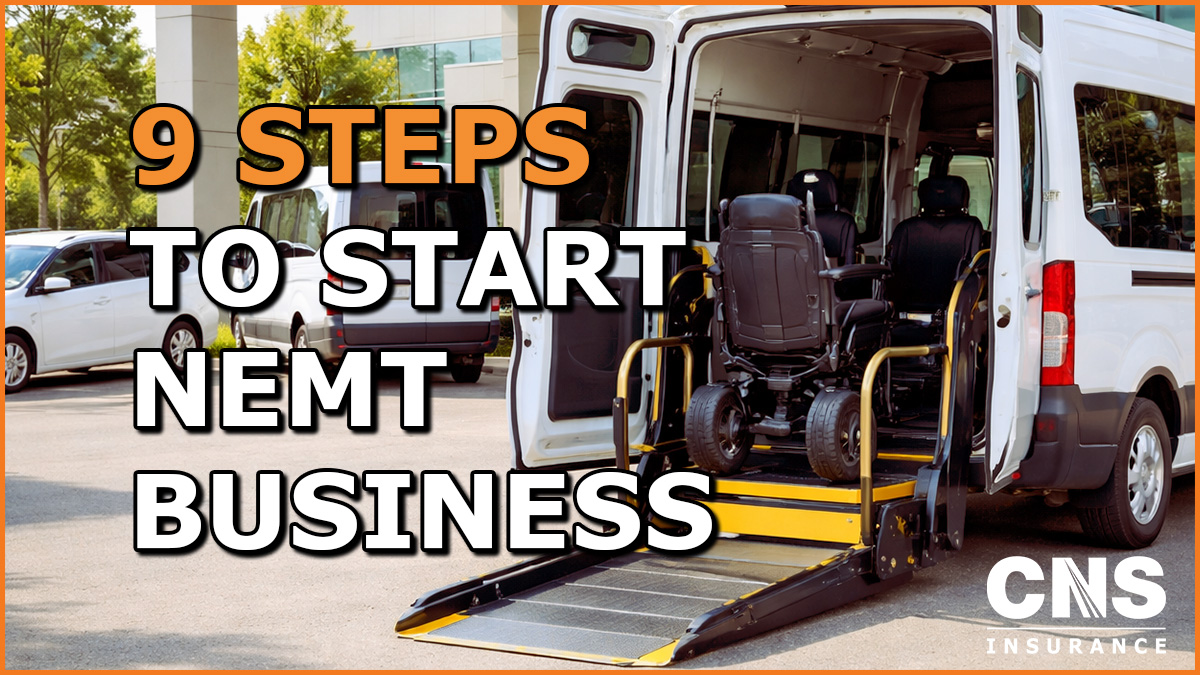
Step 4: Purchase the Right Vehicles
The type of vehicle you purchase depends on the services you plan to provide.
Common NEMT vehicles include:
Ambulatory Transport Vehicles
Used for passengers who can walk independently.
Typical vehicles:
- Sedans
- Passenger vans
Wheelchair Vans
These vehicles include:
- ADA wheelchair lifts
- Securement systems
- Accessible entry points
Wheelchair vans are among the most common NEMT vehicles.
Stretcher Transport Vehicles
These vehicles transport patients who cannot sit upright and require medical transport.
They typically include:
- Stretcher mounts
- Medical restraints
- Additional safety equipment
Step 5: Secure NEMT Insurance Coverage
Insurance is one of the most important requirements for starting a NEMT business.
Because you are transporting passengers for compensation, you must carry for-hire livery insurance designed for passenger transportation.
Most NEMT providers require several types of coverage.
Commercial Auto Liability
This coverage protects your business if a vehicle accident causes injury or property damage.
Typical federal minimum limits include:
- $300,000 liability for vehicles under 10,001 lbs GVW
- $750,000 liability for vehicles over 10,001 lbs GVW
Many Medicaid contracts require $1 million or more in liability coverage.
General Liability Insurance
General liability protects against incidents not directly related to vehicle accidents.
Examples include:
- Passenger injuries while entering or exiting a vehicle
- Slip-and-fall accidents
- Property damage
Physical Damage Coverage
Physical damage coverage protects your vehicles from:
- Collisions
- Theft
- Vandalism
- Storm damage
While not always required, it is strongly recommended.
Workers’ Compensation
Most states require workers’ compensation insurance for businesses with employees.
It covers:
- Employee injuries
- Medical expenses
- Lost wages
Umbrella Liability Insurance
Umbrella insurance provides additional protection above your standard liability limits.
Many NEMT businesses carry $1 million to $5 million in umbrella coverage.
Get started with your NEMT Insurance Quote >>>
Step 6: Hire and Train Drivers
Drivers are the backbone of a NEMT operation.
Most states require drivers to:
- Pass background checks
- Maintain clean driving records
- Complete passenger assistance training
- Understand wheelchair securement procedures
Training programs often include:
- Defensive driving
- ADA passenger assistance
- Safety protocols
Step 7: Establish Contracts and Partnerships
NEMT businesses typically generate revenue through contracts with:
- Medicaid brokers
- Hospitals
- Dialysis centers
- Assisted living facilities
- Nursing homes
- Rehabilitation clinics
Developing relationships with healthcare providers is essential for long-term growth.
Step 8: Invest in Dispatch and Scheduling Software
Modern NEMT businesses rely on software to manage operations.
Technology solutions help with:
- Trip scheduling
- Route optimization
- Driver tracking
- Medicaid billing
- Dispatch coordination
Efficient dispatch systems improve both service quality and profitability.
Step 9: Market Your NEMT Business
To grow your client base, focus on building relationships with healthcare providers.
Effective marketing strategies include:
- Networking with hospitals and clinics
- Partnering with senior living communities
- Creating a professional website
- Local SEO and Google Business profiles
- Healthcare referral partnerships
Startup Costs for a NEMT Business
Startup costs vary depending on fleet size and service type.
Typical startup costs include:
| Expense | Estimated Cost |
| Vehicle purchase | $30,000 – $80,000 |
| Wheelchair lift modifications | $5,000 – $15,000 |
| Insurance | $8,000 – $26,000 per vehicle |
| Licensing & permits | $500 – $3,000 |
| Dispatch software | $50 – $300/month |
Many small NEMT businesses launch with $50,000 to $150,000 in startup capital.
Get the Right NEMT Insurance Coverage
Starting a NEMT business requires the right insurance coverage to protect your vehicles, passengers, drivers, and business operations.
CNS Insurance specializes in coverage designed specifically for medical transportation providers. Get a Quote now.
Our team helps NEMT companies secure insurance that meets state regulations, Medicaid contracts, and operational risks.
If you have any questions or concerns, please call us at 800.724.5523 or email info@cnsinsures.com.